
The Fall of Dong Zhuo's Capital
The Romance of the Three KingdomsThis flow follows Dong Zhuo’s relocation and destruction of Luoyang, and the suffering that remains after his regime ends.
increasing Bearing strength in each event
 decreasing
Bearing strength in each eventdecreasingLeaving Luoyang
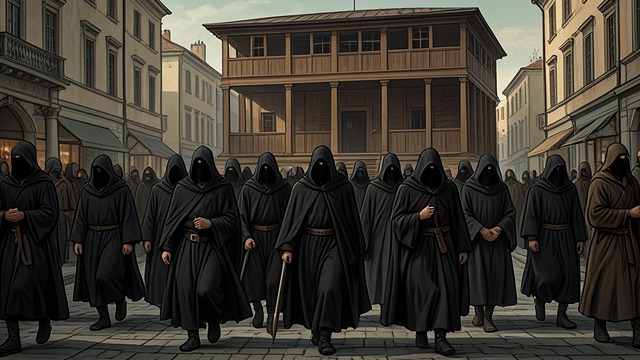
A Capital Abandoned
A Strategic Retreat
Dong Zhuo cites omens and claims that the court should return to Chang’an, where earlier Han rulers once governed.
Resistance Silenced
Officials object, but Dong Zhuo has them killed. The relocation is imposed by force rather than chosen through the court.
The Forced March
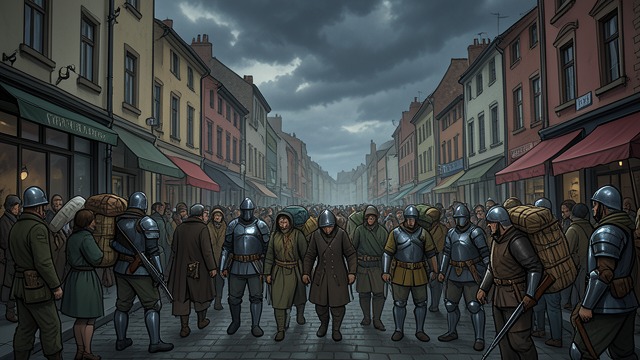
Civilians Bear the Cost
The City Emptied
Residents are driven from Luoyang while soldiers loot homes and attack families. The court’s movement becomes a mass displacement.
A Ruined Route
The journey brings hunger, exhaustion, and death. The movement of the dynasty is measured in the suffering of people who have no part in the decision.
The Burning of Luoyang
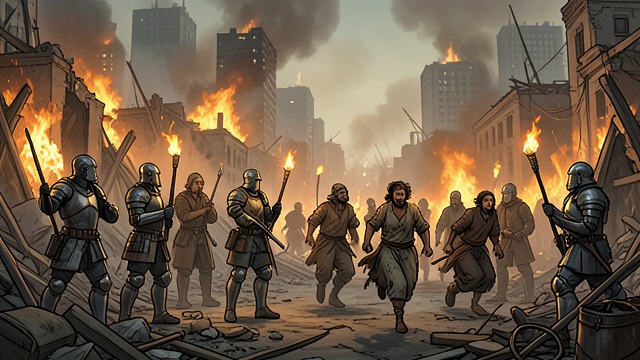
Destruction as Policy
Fires and Plunder
Dong Zhuo orders the palaces and ancestral shrines burned and the imperial tombs opened. Soldiers scatter the treasures and desecrate the dead.
The Symbolic Ruin
The city’s destruction turns political crisis into a visible break with the Han past. Its empty streets later greet the returning forces of the coalition.
The Return to Ruins
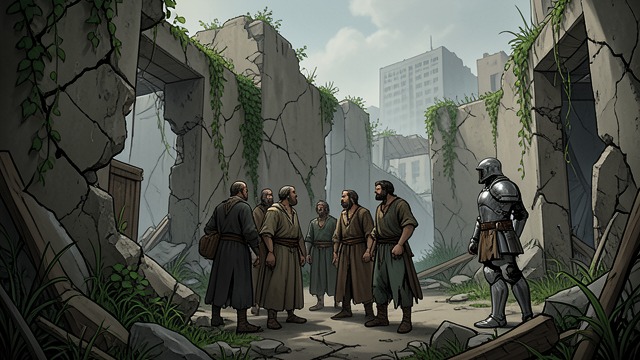
An Emperor Without a Capital
A Devastated City
Emperor Xian returns to find Luoyang reduced to weeds, collapsed walls, and a few damaged buildings.
Hunger and Dependency
The court has little food and few resources. Its dependence on outside commanders creates the conditions for Cao Cao to become the emperor’s protector and political master.
Memory of the Lost City
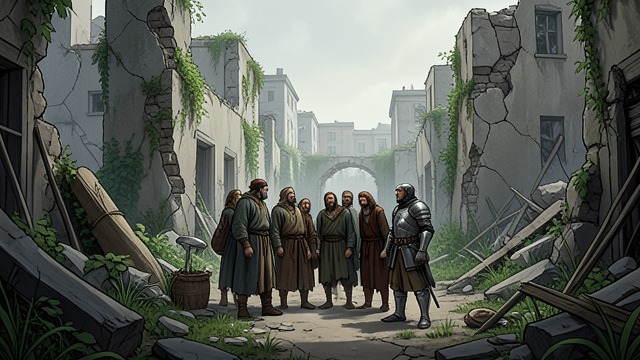
A Political Wound Remains
Restoration in Name
Cao Cao restores a functioning court at Xuchang, but the old capital cannot be restored to its former place in the political imagination.
The Meaning of Destruction
Luoyang’s ruin stands as evidence of what happens when rulers treat the country as personal property. The city’s loss is one of the novel’s clearest measures of dynastic collapse.
After Dong Zhuo’s enemies assemble
During the transfer to Chang’an
Before Dong Zhuo leaves the old capital
During Emperor Xian’s eastward flight
After Cao Cao takes control of Emperor Xian
